
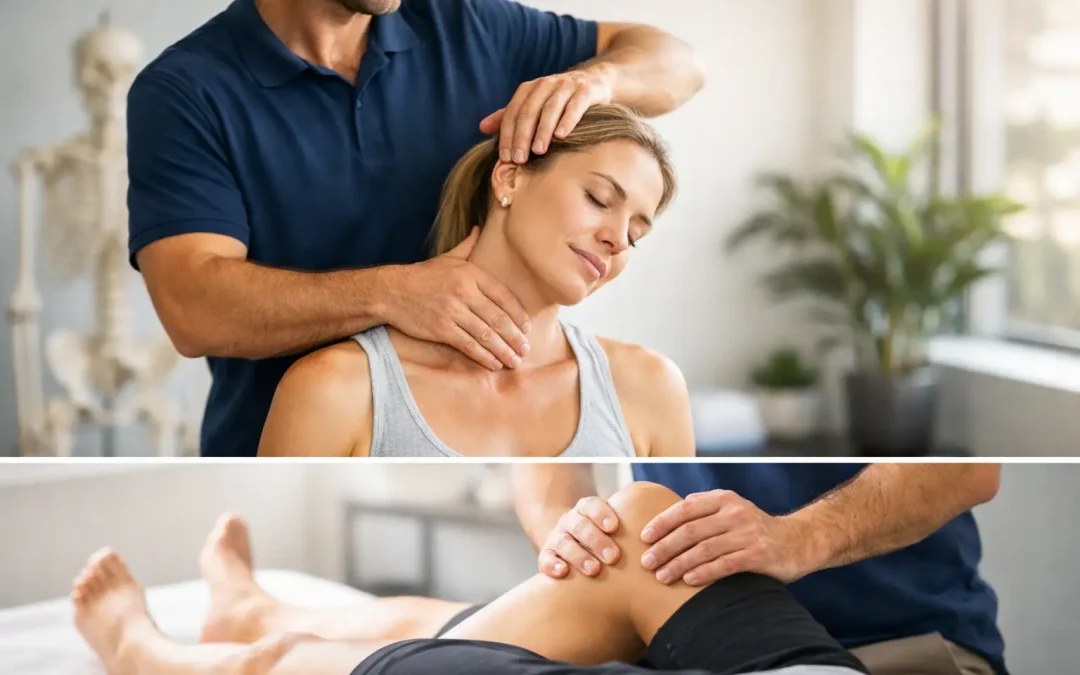
You feel it when you reach overhead, get out of the car, or try to finish a workout you used to handle easily. Pain changes how you move, and over time, those small compensations can turn into stiffness, weakness, and frustration. That is where manual therapy benefits stand out – not as a quick fix, but as part of a targeted treatment plan that helps reduce pain, restore movement, and get you back to doing more with confidence.
At its best, manual therapy is not random hands-on work. It is skilled assessment and treatment delivered with a purpose. A physiotherapist uses specific techniques to improve joint mobility, reduce muscle tension, calm irritated tissues, and help your body move in a more efficient way. For many people, that creates the window needed to rebuild strength, improve control, and make lasting progress.
What manual therapy benefits actually look like
The biggest misconception about manual therapy is that it is only about feeling good on the table. Short-term relief matters, of course. If your neck loosens up or your hip moves more freely after treatment, that can be a meaningful step. But the real value is what that change allows you to do afterward.
Manual therapy often helps people move with less guarding and less pain. That means squatting without pinching in the hip, turning your head without sharp pulling through the neck, or walking after a flare-up without feeling like your back might seize again. When pain drops and mobility improves, exercise becomes more productive. You can strengthen better, retrain movement patterns, and build tolerance for daily life, sport, or work demands.
This is especially important if you have been stuck in a cycle where pain leads to less movement, less movement leads to more stiffness, and stiffness keeps feeding the problem. Hands-on care can interrupt that cycle. It does not replace active rehab, but it often makes active rehab more effective.
How manual therapy helps the body recover
Manual therapy covers a range of techniques, and the right approach depends on what your body actually needs. Joint mobilization may help if a shoulder, ankle, or spine segment is not moving well. Soft tissue work can reduce excessive muscle tone or ease sensitivity in overworked areas. Assisted stretching and movement-based techniques may improve range where tissues feel restricted.
The key point is that treatment should match the problem. A runner with calf tightness and an irritable Achilles needs a different strategy than someone recovering from shoulder surgery or dealing with recurring low back pain from long hours at a desk. Good care is never one-size-fits-all.
There is also a timing element. Some conditions respond well to more direct hands-on treatment early on, especially when pain is limiting movement. In other cases, manual therapy plays a supporting role while strength, loading, and movement retraining do the heavier lifting. That balance matters. Too much passive treatment without a progression plan can leave people dependent on temporary relief. Too little hands-on care, and they may struggle to move well enough to make exercise count.
Pain relief is only one part of the picture
Yes, reducing pain is one of the clearest manual therapy benefits. But pain relief alone is not the finish line. The goal is function.
If your shoulder hurts less but you still cannot press, lift, or sleep comfortably, the job is not done. If your low back settles down for a day but flares every time you sit too long or return to training, there is still more to address. Strong physiotherapy uses manual therapy to create momentum, then builds on it with exercises, education, and a plan that fits your life.
That is why personalized care matters so much. The same symptom can come from very different drivers. Tightness may be true stiffness in one person and protective muscle guarding in another. A painful knee may reflect local irritation, weak hip control, ankle mobility limits, or training errors. Hands-on treatment works best when it is part of a bigger clinical picture.
Manual therapy benefits for active adults and athletes
If you are active, you usually do not just want less pain. You want your body to perform again.
This is where manual therapy can be especially useful. It can help restore range of motion after an acute strain, improve joint mechanics after repetitive overload, and reduce the protective tension that builds when an injury changes how you move. For gym-goers, runners, and recreational athletes, that often means getting back to training with better quality movement instead of just pushing through restrictions.
It also has value for people who are not training for anything specific but still want to move well in daily life. Professionals who sit for long stretches, parents lifting kids, or anyone recovering from surgery often need the same thing – less pain, better mobility, and a clear path back to normal activity. Manual therapy can help open that door, particularly when stiffness and discomfort are making basic movement feel harder than it should.
That said, results depend on consistency and follow-through. If treatment improves your movement but you go back to the same aggravating habits without addressing strength, posture, load management, or recovery, progress may stall. The best outcomes usually come from combining hands-on care with a structured rehab plan.
When manual therapy is most useful
There is no single rule, but manual therapy often fits well in a few common scenarios. One is when pain is making it hard to start rehab at all. Another is when a joint or soft tissue restriction is clearly limiting movement. It can also be helpful during post-operative rehab, where restoring mobility safely is part of the bigger recovery process.
Chronic issues can respond well too, but expectations need to be realistic. If you have had neck tension for years, recurring back pain, or long-standing shoulder stiffness, one treatment is unlikely to solve everything. What manual therapy can do is reduce the barriers that have kept you from progressing. It can make movement less threatening, improve tolerance to exercise, and help you regain trust in your body.
For some people, that shift is huge. Pain often creates hesitation. You stop turning fully, loading confidently, or using the affected area normally. Over time, the body adapts around that fear and limitation. Skilled manual therapy, paired with the right coaching, can help reverse that pattern.
What good treatment should feel like
Good manual therapy should feel intentional. Your provider should explain what they are doing, why it fits your symptoms, and what they want you to do afterward to keep the gains. You should leave with a clearer understanding of your body, not just a temporary sense of relief.
You also should not feel like you need endless appointments just to stay functional. Some conditions need ongoing care for a period of time, especially after surgery or more complex injuries. But the long-term goal should be independence. Treatment is there to support your recovery, not create reliance.
At a clinic like The Physio Approach, that means one-on-one care that combines hands-on treatment with movement-based rehab and a plan built around your actual goals. Whether that goal is getting through the workday without pain, returning to the gym, or feeling steady after surgery, the care plan should move you toward something measurable.
Why personalization changes the outcome
The most meaningful manual therapy benefits come from precision. Not every stiff area needs to be pushed. Not every sore muscle needs deep pressure. Sometimes the issue is mobility. Sometimes it is control. Sometimes it is tissue irritation, training load, or compensation from another body region.
A personalized plan accounts for all of that. It looks at what hurts, what is restricted, what is weak, what movements trigger symptoms, and what your body needs next. That is how treatment goes from generic symptom management to real progress.
If you have tried massage, stretching, or passive care in the past and only got short-lived results, that does not mean manual therapy is not useful. It may mean the bigger plan was missing. Hands-on treatment works best when it is integrated into rehab that builds resilience, restores strength, and helps prevent the same issue from returning.
The right care should make recovery feel achievable. Not rushed, not vague, and not dependent on guesswork. If your body is asking for help through pain, stiffness, or limited movement, manual therapy can be a powerful starting point – especially when it is part of a focused strategy to help you move better, be stronger, and get back to the life that feels like yours.